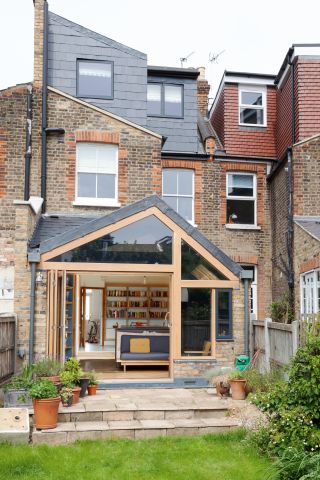
When you’re extending a house, there are some things you really must do – but plenty you shouldn’t. Observing them will save you a whole lot of hassle, time and effort – and money, too.
Use our expert tips below – and discover more extension dos and don’ts in our full guide.
1. Do: get detailed plans drawn up
Good design is about producing plans that clearly detail all the elements your builder will need to work to – right down to the depth of any steel poles that need to go in and the size of the window openings. The more that’s shown on the drawings, the less chance there is of things going off course.
Want to work with an architect? Follow our guide to find out how to do it effectively.
2. Do: minimise the unknowns
When main contractors quote for work, they are gathering lots of individual prices for the dozens of mini jobs that make up your project. The way to avoid costs changing wildly is to be very clear on specifications from the start (and, ideally, not to change your mind).
Use our guide to find out how to compare quotes from tradespeople.
3. Do: get a fixed estimate of the build cost
So many different elements influence a builder’s price that it is impossible to predict what figure they’ll give you. Use our extension cost calculator to get a good estimate, or send your plans to a cost-estimating company such as , who – for a fee in the region of £100 – will give you a detailed breakdown of the costs associated with your project.
Alex and Steve‘s Wanstead kitchen extension was a bespoke design completed on a budget of £184,800
(Image credit: Bruce Hemming)
4. Do: choose the right builder
A good builder is more than just a skilled tradesperson. Look out for one who has a loyal team they can call on at a moment’s notice; one who provides a clear, agreed payment schedule; and, most of all, one with a positive, problem-solving attitude.
Use our guide on finding a reliable builder to help source yours.
5. Do: agree prices with everyone upfront
One of the most stressful moments in any project is when the invoices arrive – particularly if they’re more costly than expected. The blame for this usually lies with you, for not being clear about what you want or changing your mind, and the tradesperson, for not communicating how costs were mounting up. The best way to avoid surprises is to all keep lines of communication open and be clear on variations to the original specification. Need to budget carefully?
Find out how to cut the cost of your extension.

The kitchen extension was part of a whole house renovation
(Image credit: Malcolm Menzies)
6. Don’t: use unusual materials
Asking builders to forego their many years of experience to create something totally bespoke, or to use materials that are alien to them, is not the path to a smooth project. You are introducing unknowns into your scheme – which can result in unpredictable cost and scheduling outcomes. Go with what the builder knows – in most cases, they do know best.

Sarah and James moved their basement kitchen to a light-filled extension to transform the flow of their home
(Image credit: Paul Craig)
7. Don’t: neglect cash flow
Almost any problem on-site during an extension project can be solved with money – and if you haven’t got it to hand, you can’t get anything done. Be honest with yourself about your finances and make sure you know where the money is coming from for each invoice.
If you’re taking responsibility for individual elements of the project, be clear with your builder where the boundaries lie. You might want to take on some of the final fittings, fit the flooring or do your own decorating, but it’s not always straightforward where one job starts and another ends. You might be fitting your own doors – but who will fit the door linings? If you’re doing the floor finishing, who is responsible for ensuring the floor is level?
If you’re flexible about when you can start your extension then ideally you should try to start in March or April, when there’s little chance of the ground being too frozen to dig, or the air being too cold for brickwork. As the extension project begins to make the house feel more open to the elements, it’s much better to experience unplanned alfresco dining in summer than in winter. Not to mention, the lack of a heating system for a few weeks is more palatable in July than in January.
10. Don’t: forget to get the right insurance
Despite your best efforts, all sorts of things can go wrong with an extension project. The right renovations insurance will help to put your mind at ease. Notify your existing home insurance provider of your plans before you start and, if necessary, ensure you buy specialist extension insurance to cover the structural elements – in addition to unexpected mishaps such as materials going missing, or accidents happening to people on-site.
- Image above: